Start with the person, not the workout
Beginning a fitness program is relatively easy. Finding an approach that still works when deadlines, family responsibilities, poor sleep and changing schedules enter the picture is much harder. A practical plan starts by understanding the person before selecting the exercises.
Goals, previous training experience, injuries or relevant health considerations, preferred environment and weekly availability all influence the right starting point. Someone returning after years away from exercise needs a different introduction from an experienced gym member who wants more structure or better technique.
Success can also mean different things. One client may want to build strength or manage their weight, while another wants enough confidence to use unfamiliar equipment or establish a routine they can maintain. Defining the purpose early gives each session a clearer direction.
Why one-to-one coaching can help
Group exercise can be motivating, but it does not suit every person or every goal. Beginners may need more time to practise a movement, while experienced clients may benefit from close feedback on loading, range of motion and exercise selection.
One-to-one coaching gives the trainer time to observe technique, answer questions and adjust the plan when something does not feel right. Progress can then be introduced gradually. It might mean improving the control of a squat, adding resistance, completing another repetition or recovering more comfortably between sets.
The goal is not necessarily to make every workout exhausting. It is to create an appropriate challenge that can be repeated, reviewed and developed over time.
Training options for different needs
Personal training can cover more than a conventional gym session. Depending on the client, coaching may focus on general strength and fitness, non-contact boxing skills, weight management or a mobile appointment delivered at an agreed home, workplace or suitable outdoor location.
Some people prefer to work with a female trainer or want exercise adapted around menopause, disability or changing confidence. These preferences matter, but they should not produce the same standard program for everyone. Exercise selection still needs to reflect individual ability, experience, goals and relevant professional advice.
Professional boundaries are important. Personal training is not a substitute for physiotherapy, dietetics, accredited exercise physiology or medical care. Persistent pain, clinical conditions and specialist nutrition needs should be discussed with an appropriately qualified health professional.
Making training work around South Melbourne
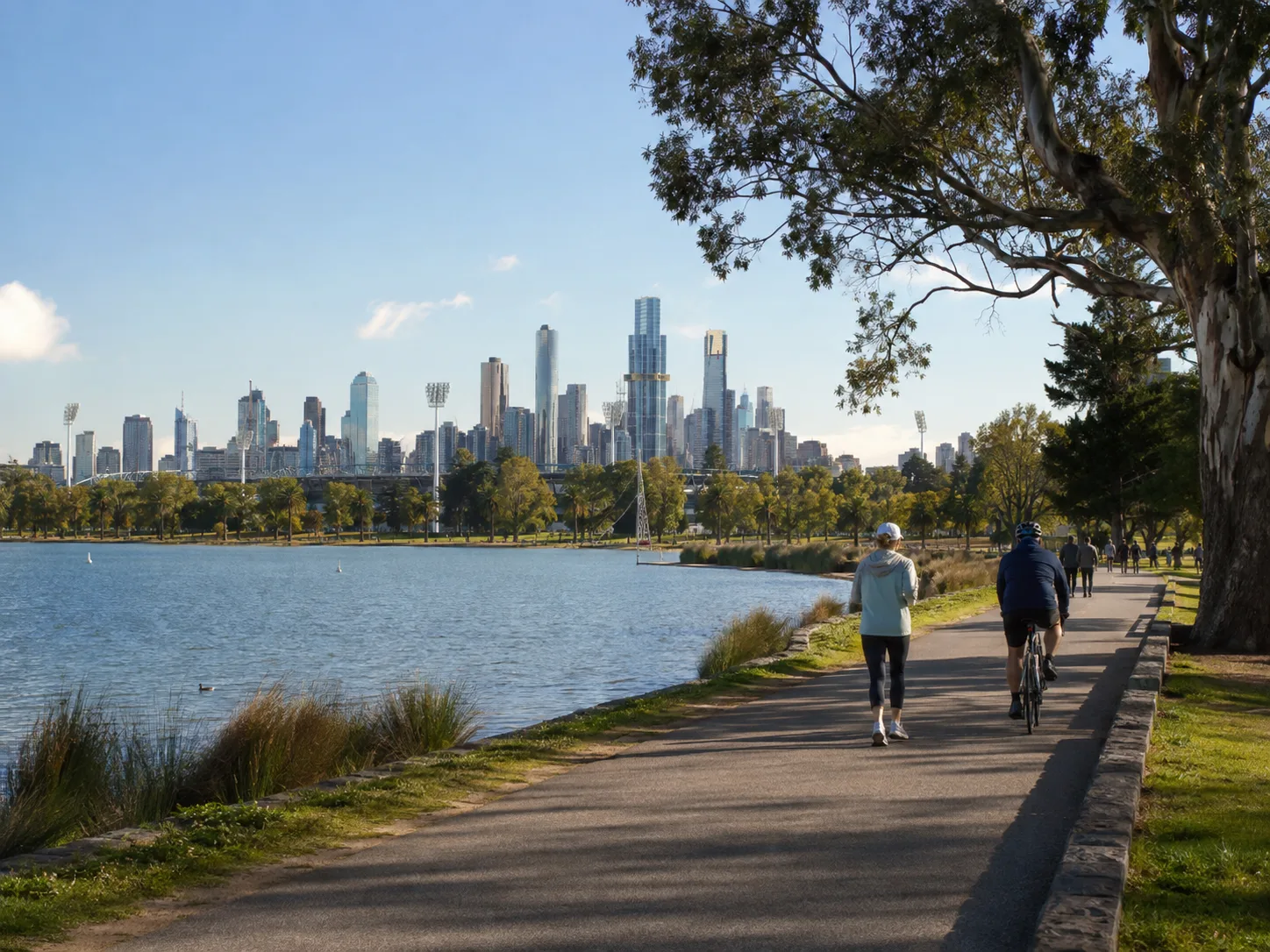
South Melbourne has several practical settings for an active routine, from private training spaces to nearby walking routes and the wider Albert Park recreation precinct. The best location depends on access, equipment, weather and the type of coaching required.
Mobile training can help people who find a separate gym visit difficult to fit into the day. Portable equipment, bodyweight movements and carefully selected resistance exercises can create a useful session without a large commercial facility. Apartment gyms and workplaces may also be options where building rules and access arrangements allow them.
The surrounding suburbs create further possibilities. Port Melbourne, Albert Park, Docklands, Southbank and Melbourne CBD are all close enough for training enquiries, although travel time, venue permissions and the exact meeting point should be confirmed before booking.
A realistic approach to progress
Strength programs commonly use squat, hinge, push, pull and carry patterns, adjusted to the person and the available equipment. Aerobic work might involve walking, cycling, boxing rounds or suitable intervals. The value comes from selecting the right activity and tracking how the client responds.
For weight-management goals, exercise is only one part of a wider picture. Sleep, stress, medication, health conditions, nutrition and everyday movement can all influence results. Responsible coaching therefore avoids guaranteeing that one workout style will produce a fixed amount of weight loss.
Progress can be reflected in better technique, improved strength, greater exercise confidence, more consistent attendance or increased cardiovascular fitness. These measures often provide a more useful view than reacting to a single number on the scales.
Choosing a practical starting point
For readers comparing local coaching options, South Melbourne Personal Trainers bases its service around individual goals, experience, schedule and preferred place to train. The business offers focused 30-minute sessions for $60 and 45-minute sessions for $100, with a free introductory personal training session available to help prospective clients discuss the plan before deciding what comes next.
The shorter format may suit a clearly defined focus or a tight schedule. A longer appointment allows more time for preparation, compound movements, technique coaching, conditioning and recovery between demanding sets. The right choice depends on what the session needs to achieve rather than assuming longer is automatically better.
Good personal training should also help clients understand what they are doing. Learning how to set up equipment, recognise appropriate effort and record repetitions or resistance can make activity outside supervised sessions more confident and independent.
For South Melbourne residents looking for guidance without a punishing or generic approach, the principle is straightforward: begin with the individual, give each session a purpose and build progress at a pace that can continue in real life.
Local details can change. Confirm opening times, access and bookings with the venue or the City of Port Phillip before travelling.